


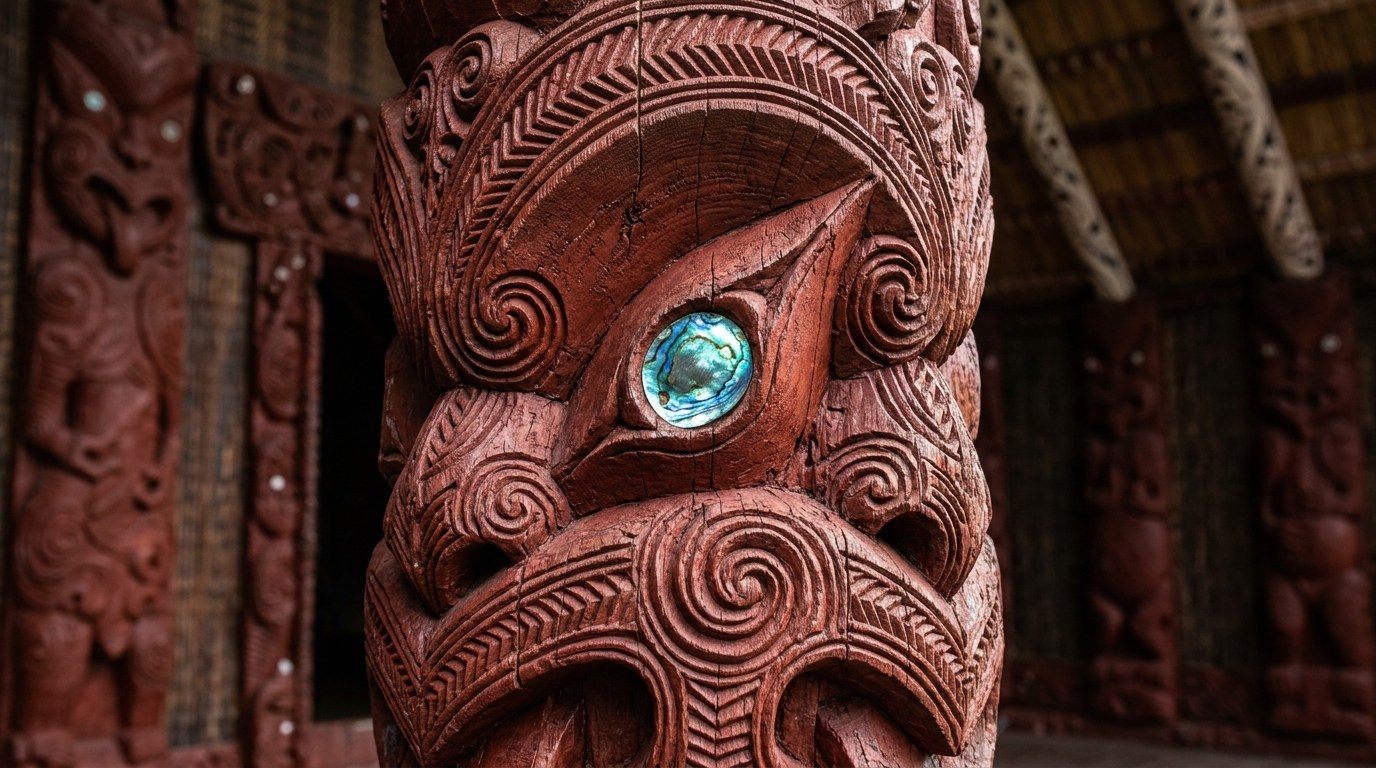
Māori culture is living, diverse and grounded in relationships to specific people and places. The language and customs visitors encounter are not a single national script.
Iwi, hapū and whānau shape lived identity
Māori are tangata whenua of Aotearoa New Zealand, with iwi, hapū and whānau relationships that connect people to place, history and one another. Those relationships are varied. A practice familiar in one rohe may be expressed differently in another, and a person’s identity is not a checklist of customs. Contemporary Māori life includes urban and rural communities, te reo learners and first-language speakers, artists, workers, leaders, parents, elders and young people.
Some words are often translated into English, yet a translation rarely carries the whole network of meaning. Whakapapa can refer to genealogical connections and wider relationships between people, ancestors and the natural world. Tikanga describes practices and values that guide conduct in a particular context. Manaakitanga concerns care, hospitality and respect. Kaitiakitanga expresses responsibilities for people and places. These are not interchangeable labels for generic kindness or environmentalism.
Understanding begins with context. Who is speaking- Which community is hosting- What place is involved- What has that group asked of visitors- The answer can vary even within one region. Māori knowledge is not a public resource that anyone can use without permission.
Language carries identity and place
Te reo Māori is an official language of New Zealand and a language of everyday life, ceremony, education, media and public service. The revitalisation of the language has involved generations of Māori communities, educators, broadcasters and learners. Kōhanga reo, kura kaupapa Māori, wānanga and immersion programmes have created pathways for children and adults to learn through Māori language and knowledge.
Pronunciation is a practical way to show respect. Macrons mark long vowels and can change a word’s meaning, so place names and people’s names deserve care. The sounds are learnable: practise the vowel pattern, listen to fluent speakers and avoid turning a name into a joke when it is unfamiliar. A sincere attempt is better than replacing a Māori name with a nickname simply for convenience.
Regional dialects, vocabulary and pronunciation can differ. A speaker from one rohe may use forms that are less familiar elsewhere. This variation is not a mistake to be corrected by a general guide. Māori communities continue to shape how their language is spoken and taught.
Marae: communities, not attractions
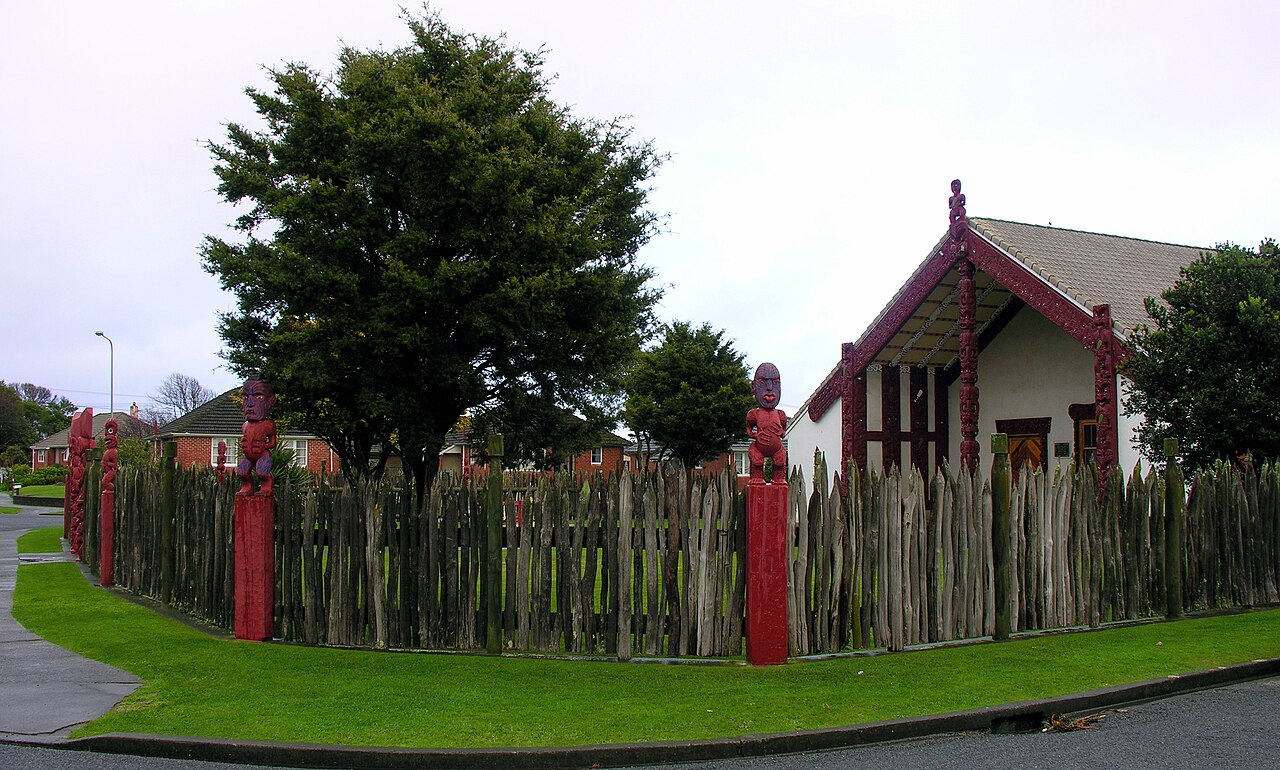
A marae complex is a place of gathering, identity and responsibility, often centred on a meeting house and its forecourt. It may host welcoming ceremonies, hui, tangihanga, celebrations, learning and community decisions. The people who hold responsibilities for a marae are tangata whenua in that setting. Their authority and practices are grounded in local relationships.
A complex can include a wharenui, marae ātea and wharekai, each with a distinct role; local names and arrangements vary. During a tangihanga, relatives may stay for an extended period while the host community organises sleeping, food and visiting arrangements. A guest attending a specific event fits around those arrangements, even if the site also hosts public visits at another time.
A pōwhiri is a formal welcoming process that may include karanga, whaikōrero, waiata, hongi and shared kai. The sequence, speakers and expectations vary. At a hosted visit, attend to the welcome and local instructions as they are given; a memorised protocol cannot account for every tikanga or rohe. Some marae are open for specific events or tours; others are not available to the public without an invitation.
Food, shoes, photography and the handling of objects can carry particular rules. A host may explain where to sit, when to speak, whether to photograph and how to participate. Waiting for that guidance is part of showing respect. A marae is not a backdrop for casual filming or a stage where visitors should improvise a ceremony.
Values become visible through relationships
| Concept | A broad starting point | Why context still matters |
|---|---|---|
| Whakapapa | Genealogy and relationships that locate people within wider networks | Its use in introductions and identity can be personal and specific |
| Mana | Authority, standing, dignity or influence held and affirmed in relationships | It is not a simple synonym for prestige or personal confidence |
| Manaakitanga | Care, hospitality and respect shown to people | Hosts and guests have responsibilities that shape how it is expressed |
| Whanaungatanga | Relationships, kinship and a sense of connection | It grows through shared responsibility rather than a one-off greeting |
| Kaitiakitanga | Guardianship and responsibility for people, resources or places | Authority and obligations are connected to local history and mana whenua |
Manaakitanga involves hospitality and care, including responsibilities held by hosts and guests. Kaitiakitanga concerns responsibilities to whenua and living systems. Whanaungatanga grows through ongoing relationships and the obligations people hold within them.
Identity is connected to whenua and rohe
Whenua can mean land and also placenta, linking birth, family and place in ways that English cannot compress into a single phrase. Ancestral mountains, rivers, coastlines and settlements can hold whakapapa and identity for iwi and hapū. For those connected to it, a landscape can be a destination and a relative or responsibility.
Place names often preserve histories, events and relationships. A name may carry a story that is not visible from a roadside sign. Use it with care and do not assume that a tourist description captures the local account. A significant site can have access restrictions, rāhui or protocols that differ from nearby public land.
When visiting a culturally important place, read local guidance and respect signs. Do not climb onto, remove or move objects; avoid drones or photography if restricted; and understand that a public road nearby does not make every adjacent space public. A host or mana whenua authority determines how visitors should approach the place.
Contemporary Māori culture evolves
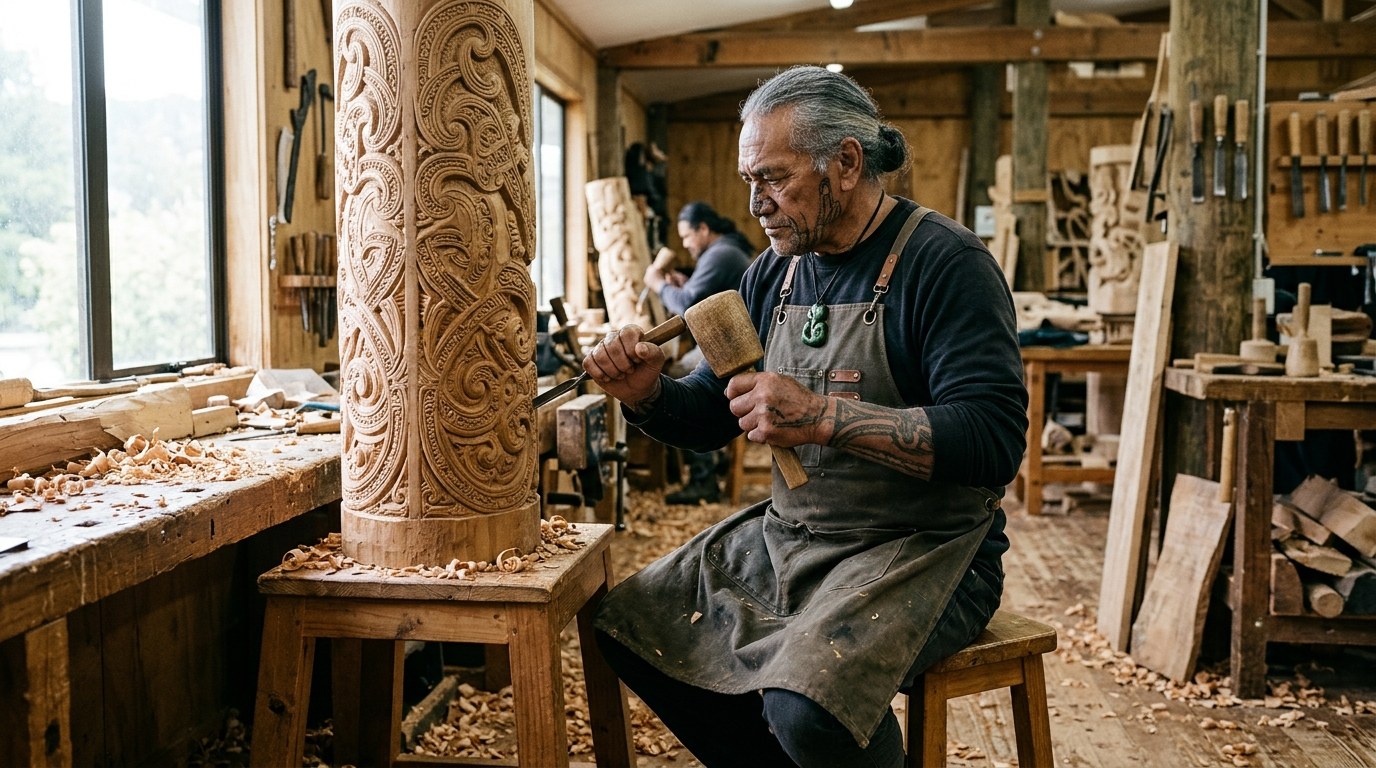
Māori creativity is not limited to traditional forms displayed in museums. It appears in contemporary visual art, film, music, architecture, fashion, literature, gaming, activism, education and public leadership. Artists and communities work with carving, weaving, tā moko, performance and design in ways that may draw on inherited practice while responding to current life.
Some forms carry restrictions around who may create, wear or interpret them. Tā moko can express personal and genealogical identity; it should not be treated as a decorative pattern to copy. Carving and weaving are also disciplines with particular knowledge, materials and teachers. Admiration does not grant permission to reproduce a design or story.
People can support Māori artists by learning who made the work, understanding how it is intended to be used, and buying from the artist or authorised seller. That is different from using a visual motif as a generic “Māori look” in branding or decoration.
Learning with care
- Begin with local voices when learning about a particular iwi, marae or landmark.
- Do not assume that one person can speak for all Māori or that a public resource can answer a community-specific question.
- Ask before photographing people, ceremonies, taonga or restricted places.
- Keep language, art and knowledge attributed to their creators and communities.
- Distinguish a word’s dictionary gloss from its role in an actual relationship.
Curiosity needs room for restraint. Some questions can remain unanswered until the person with the knowledge chooses to share it. Listening lets learning continue without placing pressure on a speaker.
The history of New Zealand explains the political and social events that shaped Māori–Crown relationships. The festivals guide looks at public celebrations such as Matariki through their regional and community contexts.
Visibility does not make knowledge public
Māori words, symbols and ceremonies are increasingly visible in public institutions and everyday media. Visibility can support language normalisation, yet it can also detach a symbol from the people and responsibilities that give it meaning. A pronunciation guide, museum label or government website is a beginning, not a licence to use knowledge in any setting.
When a public body uses a local place name, the spelling should follow the form used by the relevant mana whenua; names and macrons carry local history. Images, waiata and recorded kōrero may also have conditions on copying or public display, even when a speaker has shared them in one setting.