


Aotearoa’s wildlife evolved in isolation, producing unusual forms and behaviours. Seeing these species well requires attention to habitat, timing and the distance an animal needs.
Isolation shaped native wildlife
New Zealand’s long isolation from other landmasses shaped a living world with few native land mammals and many birds, reptiles and invertebrates. Several birds evolved without the need for flight; others became specialised for forest, wetland, alpine or coastal habitats. Tuatara belong to an ancient reptile lineage, while native bats are the only surviving land mammals that arrived naturally before people.
“Endemic” means a species occurs naturally in one place and nowhere else. It does not mean that every individual is common, easy to see or safe from harm. Some species occupy a small range, need a specific nesting site or are active only at night. A species may be well known nationally yet difficult to observe in the wild.
Predators, land clearance and introduced diseases changed the conditions under which many native species evolved. Conservation work now includes habitat restoration, pest control and managed recovery sites. Access to threatened species varies: some live in public sanctuaries, while others need distance from visitors or can be seen only with a permitted guide.
Read species through their habitat
Habitat clues help a visitor search in the right way. A nocturnal bird will not appear simply because a forest is beautiful at midday; a bat may be present without ever being seen. A forest call can tell more about wildlife activity than a clear photograph. For many species, the best encounter is one that does not change the animal’s behaviour.
| Group | Ecological pattern | Observation clue |
|---|---|---|
| Kiwi | Nocturnal, ground-dwelling birds that use forest and scrub | Quiet hides and managed sanctuaries offer more reliable viewing than a daytime forest search |
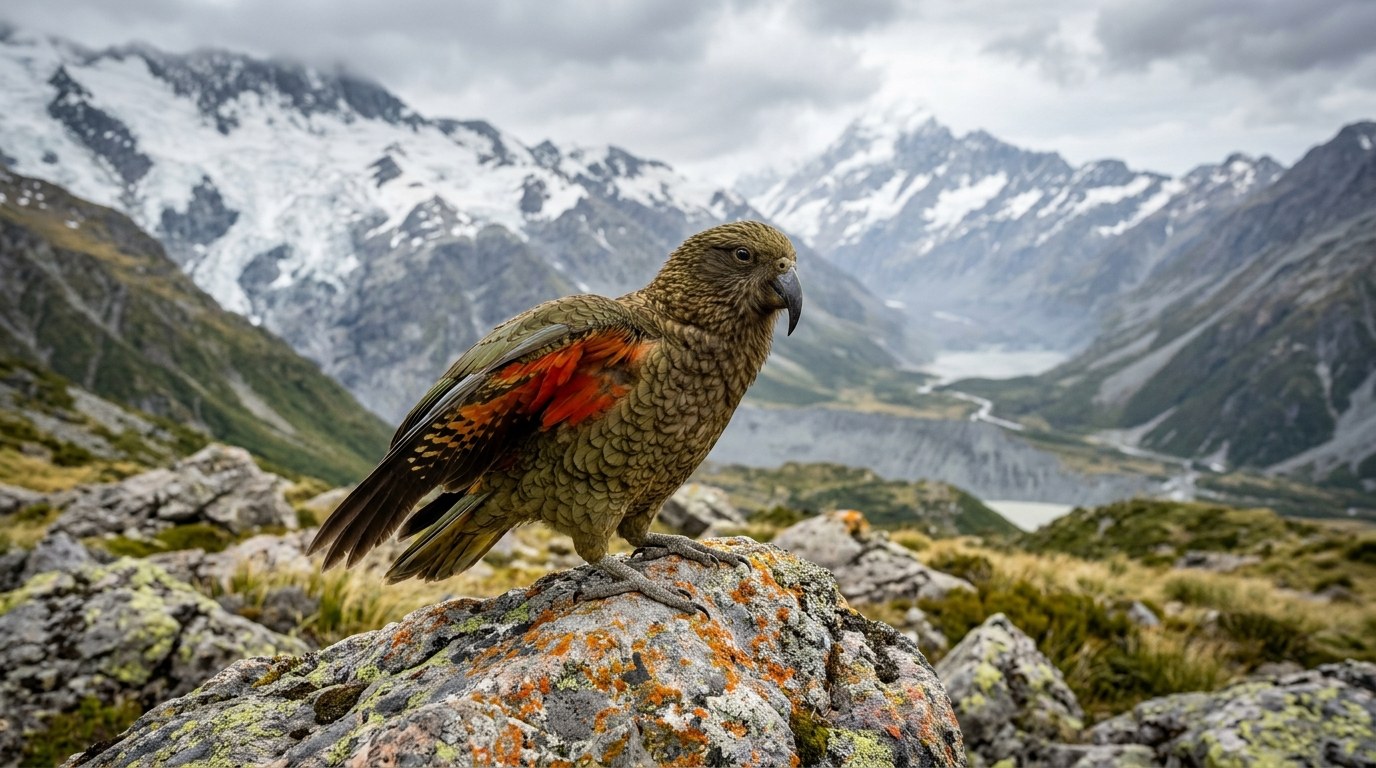
| Kākā and other forest parrots | Mobile birds that feed and move through native forest and urban-edge habitat | Listen for calls, scan canopy edges and avoid feeding |
| Tuatara and geckos | Reptiles tied to suitable microclimates, refuges and islands | Guided or sanctuary settings reduce the risk of damaging hiding places |
| Long-tailed and short-tailed bats | Nocturnal mammals that roost in trees and hunt insects | Acoustic detectors and dusk surveys are more useful than bright lights |
| Wētā and other invertebrates | Small-scale communities on forest floors, trunks and caves | Look closely without lifting, crushing or relocating shelter |
| Seabirds and marine life | Life cycles cross islands, beaches, cliffs and offshore waters | Breeding seasons and marine protection rules define safe viewing distance |
Kiwi are several distinct species
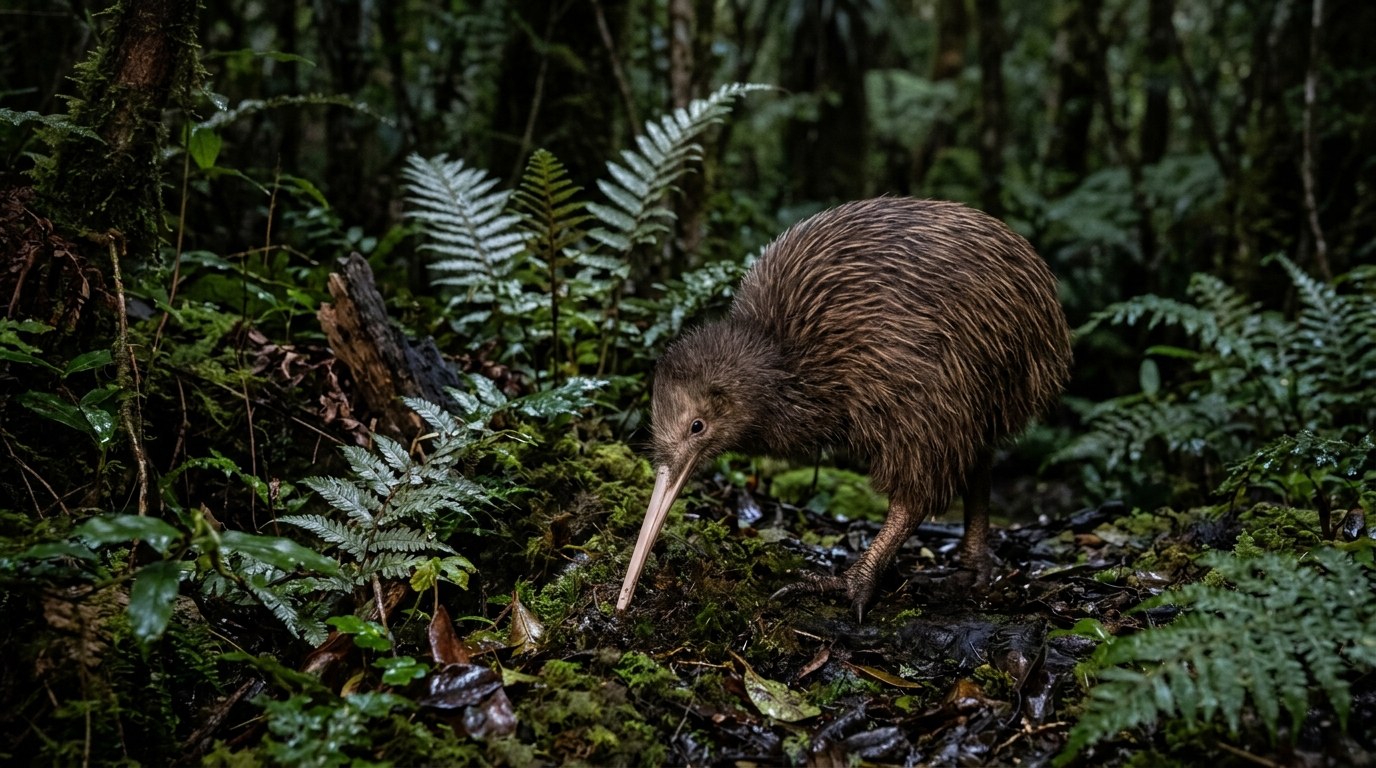
Kiwi are flightless, nocturnal birds with strong legs and long bills used to probe soil and leaf litter. Their nostrils sit near the tip of the bill, an unusual arrangement among birds. Different kiwi species occupy different parts of the country and face different conditions. Their size, habitat, nesting behaviour and conservation needs are not identical.
Daytime encounters are unusual in the wild. Visitors may hear kiwi in the evening around well-managed forest or island habitat, but a quiet bird is easily disturbed by light, noise or people approaching a nest. A guided sanctuary walk uses controlled viewing practices; it also helps avoid misleading expectations about what can be seen.
Dogs create a serious risk for kiwi because scent and speed give them an advantage over a bird that nests on the ground. Dog restrictions and lead rules protect birds in many areas. A friendly pet can still be a threat. Follow the park signs and leave dogs outside kiwi habitat when required.
Tuatara, bats and invertebrates
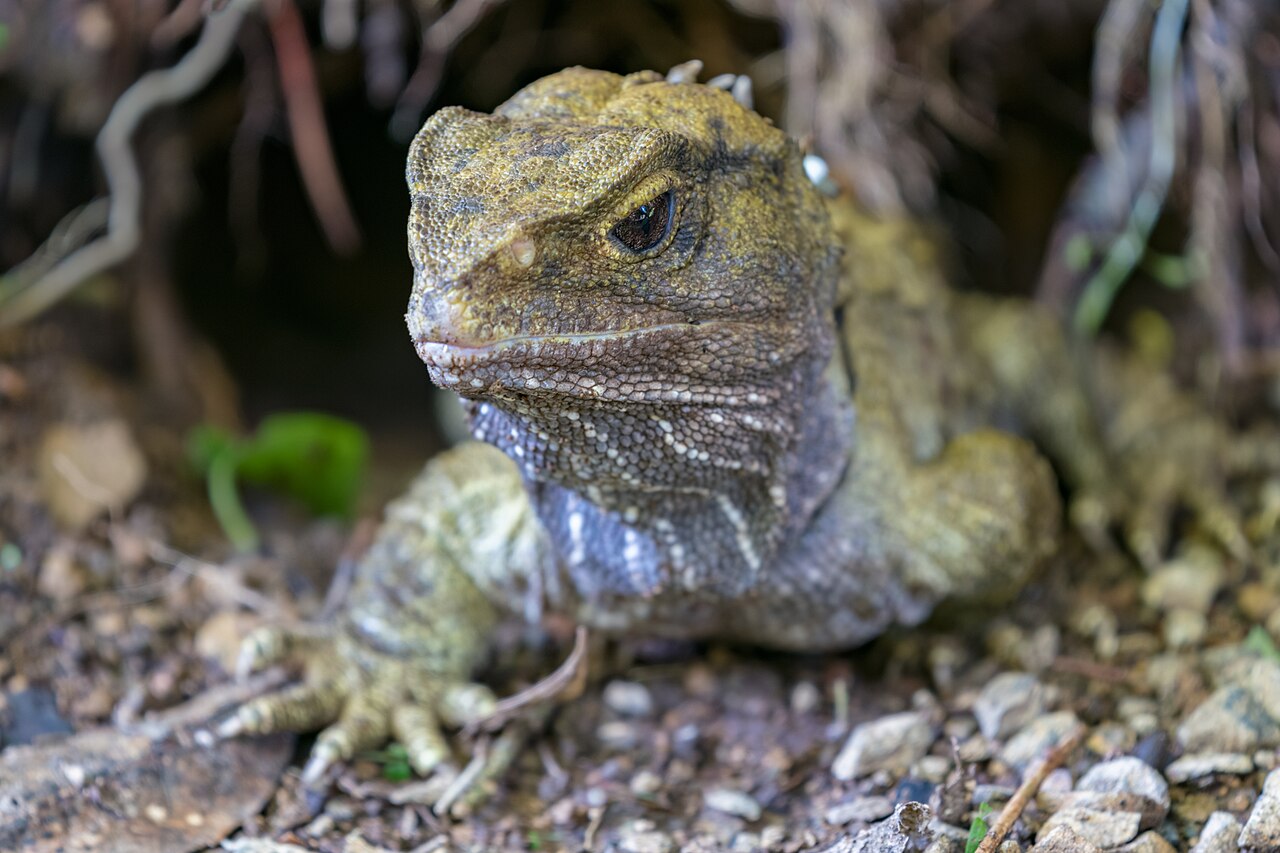
Tuatara are reptiles rather than lizards and are the sole living members of their order. Their growth and activity are closely tied to cool island and sanctuary environments. A managed site or knowledgeable guide can explain how burrows, nesting and temperature shape tuatara activity while keeping visitors away from vulnerable refuges.
New Zealand’s native bats are small, nocturnal and easily overlooked. They roost in tree cavities and use echolocation to find insects in flight. Forest fragmentation and disturbance to roost trees can affect them even when no animal is visible. A bat detector can make a night walk feel like a new landscape: calls become data about who is moving through the darkness.
Invertebrates are equally distinctive. Wētā, giant snails, native bees and countless smaller species influence pollination, decomposition and food webs. Their scale makes them vulnerable to trampling and habitat changes. Moving a log to look underneath can expose sheltering creatures to heat, drying and predators; leave it where it lies.
Coastal and offshore wildlife needs space
Seabirds move between nesting sites, beaches and feeding grounds; seals and sea lions use shorelines to rest and moult; dolphins and whales travel across large marine areas. A coastal visitor may encounter animals far from a reserve boundary. Distance, quiet and an unobstructed path to the water reduce stress.
Never feed wildlife or surround an animal for a photograph. Keep dogs away where signs require it, avoid walking through a colony and follow DOC’s current species-specific rules for boats and people. Marine animals may appear calm while still being affected by close approaches. If an animal changes its behaviour to avoid people, the viewing distance is too short.
During nesting or moulting seasons, access restrictions can protect a small area that contains many individuals. Temporary fencing and signs can seem inconvenient on a busy beach, but they often correspond to the exact place where eggs, chicks or resting animals are most exposed.
Observe wildlife without disturbance
- Choose the right setting. A sanctuary, hide or guided night walk offers more reliable viewing than searching random habitat.
- Use time rather than distance. Stay still, listen and allow animals to use the habitat on their own schedule.
- Keep food and bait away. Feeding changes behaviour and can create dependence or conflict.
- Protect habitat. Stay on tracks, keep out of burrows and leave eggs, nests, plants and logs undisturbed.
- Accept a no-sighting day. Wildlife viewing is a chance encounter, not a guarantee or a performance.
Photography can reinforce patience. A long lens reduces the need to approach, while a phone flash can disorient a nocturnal animal. Never publish precise locations for vulnerable nests or rare species unless the site has invited that sharing. Location data can expose wildlife to visitors who do not understand the site’s limits.
Read a sighting in its time and place
Seeing a species confirms its presence at one moment; it says little about how many animals use a valley, island or forest across a year. The same bird may be easy to hear at dawn and difficult to see later in the day. Rain, wind, breeding season, food and an observer’s position all change what becomes visible.
Identification also has limits. Juvenile and adult plumage may differ, calls can overlap, and tracks in soft ground may be incomplete. A useful personal record notes the date, broad habitat, weather and behaviour, while separating a clear observation from a tentative identification. A careful description can be more accurate than a confident label.
Location detail requires care. A precise nest or rare-animal location can attract repeated visits and disturbance. Keep sensitive coordinates private and follow the rules of the reserve or sanctuary. Public sites may set out whether a sighting should be reported and how much detail to share.
Repeated observations of familiar species can reveal the rhythms of a place without establishing a population trend. A sheltered estuary, urban garden, alpine scrub and offshore island each make different wildlife visible; the same setting can change markedly between seasons.
The nature-conservation guide covers the management choices that affect habitats. For a place-based account of protected landscapes, the national parks guide describes access, tracks and visitor care.
Urban wildlife still needs habitat
Kererū, tūī, pīwakawaka, kākā and other native birds use gardens, streams, city parks and suburban trees as well as remote parks. Native planting can add food and shelter but cannot replace intact forest or wetland. Cats, dogs, glass, traffic and introduced pests expose birds to pressure at the urban edge.
Local planting groups, council reserves and schools can connect residents with native habitat without requiring a wilderness trip. Plant choice should fit local soil and climate, and maintenance matters as much as the initial planting. Wildlife benefits most when a network of connected green spaces remains available through the year.
Records that protect wildlife sites
A careful observation can help a conservation group understand where a species is active, especially when the record includes a date, habitat and a clear description. Photographing from a distance, noting the weather and avoiding bait or disturbance can make an observation more useful. Do not handle an animal to improve the record.
Exact location data can also create risk. A rare nest or roost may attract people who do not know the access rules. Use the reporting channel requested by a monitoring project and avoid posting sensitive coordinates publicly. A record should support habitat care without turning a vulnerable site into a destination.
Species names can change as taxonomic understanding develops, and Māori names may vary by region or community. A local name is part of a relationship to place, while a scientific name provides a standard reference across locations. Both can be useful when they are attributed and used carefully.